It's 10 PM, Do You Know Your Parenting Philosophy Is on VHS? A Field Guide to the Advice That Raised Us
Photo: dave_7 from Lethbridge, Canada, CC BY-SA 2.0, via Wikimedia Commons
My mother's basement is where advice goes to be archived. Down there between a bread maker that was used twice and a box of cables for technology that no longer exists, I found the primary sources of my own upbringing: parenting books, school pamphlets, and a VHS tape that I am legally required to describe as 'a stranger danger program distributed to elementary schools in 1986.'
I took them home, read them like an archaeologist, and rated them. Because if we're going to parent like it's 1974 — and on this website, we frequently do — we should know which parts of the manual were load-bearing and which parts were load-bearing nonsense.
Dr. Spock: Quietly Radical, Quietly Correct
Verdict: Surprisingly holds up.
The pop-culture version of Dr. Benjamin Spock is that he invented permissive parenting and personally caused the counterculture. The actual book — Baby and Child Care, the bestselling volume of the 20th century behind the Bible — says things like 'trust yourself' and 'children thrive on being useful.' Not 'give your child everything.' Not 'hover.' Trust yourself, and let the kid carry the plates.
That second part is the one that got underlined, in my mother's handwriting, in 1978: Spock recommended children have real household jobs because being genuinely needed builds genuine confidence. The man would have endorsed my chore spreadsheet. He would have approved of me firing myself from the drop-off line. I came to the basement to dunk on the past and left with an ally.
Stranger Danger: Well-Meaning, Deeply Flawed
Verdict: Retire it immediately.
The school pamphlet I found instructs children to distrust 'strangers' with no further specification, which is a problem, because by that definition every person a child has never met — including the firefighter, the nurse, and the nice librarian — is a threat. Decades of research since have shown that danger overwhelmingly comes from people kids know, and that 'Stranger Danger' taught children to be afraid of the wrong people and too embarrassed to seek help from the right ones.
The modern replacement — 'tricky people,' a concept popularized by safety educator Pattie Fitzgerald — is better in every way. It teaches kids to watch for behavior (adults who ask kids for help, who tell them to keep secrets) instead of familiarity. The past got the fear right and the solution wrong.
'It's 10 PM. Do You Know Where Your Children Are?'
Verdict: Accidentally the greatest free-range PSA ever made.
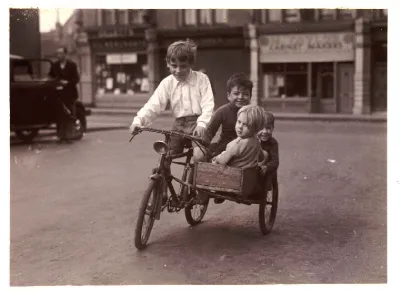
This 1967 network PSA was intended to terrify parents into stricter supervision. Instead, reread it. It's a question. It assumes the default state of children in the evening is somewhere else, doing something unsupervised, and the parent's job is merely to maintain basic awareness. That's it. That's the whole ask. Not 'be in the room.' Not 'enrich them.' Just: do you know where they are? Broadly?
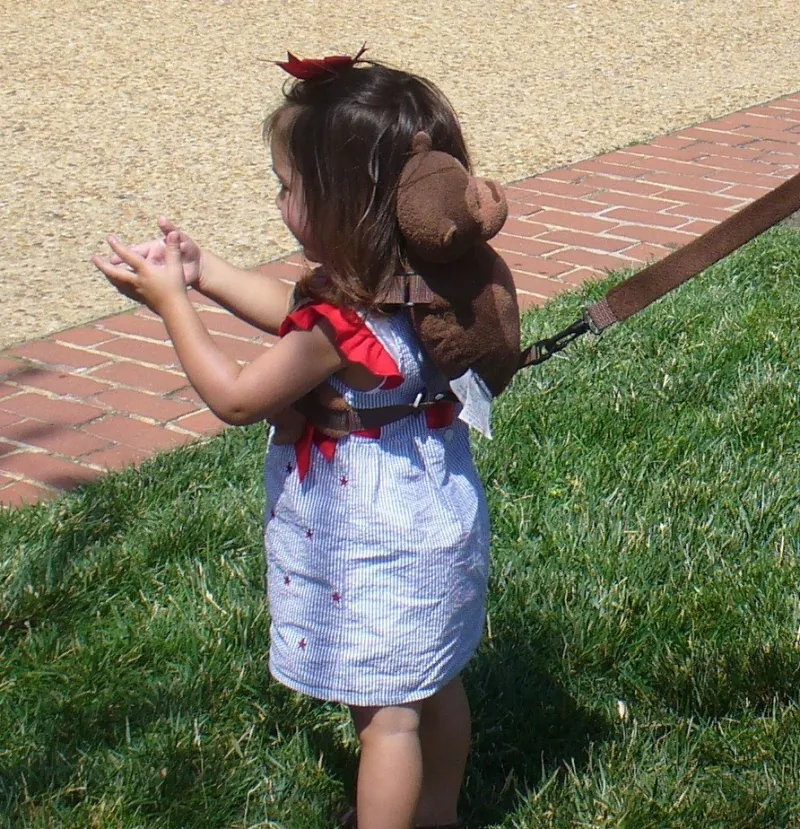
We went from that to GPS trackers in backpacks and location sharing with the entire soccer team in one generation. The PSA was more hands-off than most modern parenting apps. Let that marinate.
The 'Kids Amuse Themselves' Assumption
Verdict: Quietly brilliant, restore immediately.
Scattered through these old books and pamphlets is an assumption so casual it's easy to miss: that children will be bored, and that boredom is their problem, not yours. One pamphlet literally suggests 'a stick, a ball, or a patch of dirt' as sufficient recreational resources. No activity calendar. No enrichment. Just the confident expectation that a child's imagination will show up for work eventually, because it has no choice.
Every modern study on boredom, creativity, and self-directed play confirms what these pamphlets knew by accident: the cure for 'I'm bored' was never the parent. It was the boredom.
The Takeaway From the Basement
Here's what struck me most. The old advice wasn't better because the past was golden — half of it was dangerous nonsense, and the 'dangerous' half is exactly the half we've already fixed. But underneath the fearmongering was a spine of sturdy, unfashionable common sense: trust yourself, expect competence, let them be bored, know roughly where they are by 10 PM.
We don't need to bring back the VHS tape. We just need to keep the parts that worked, the way our parents kept everything else in the basement: indefinitely, and without apology.