I Handed My Kid a Grocery List and Sat in the Parking Lot Like a Getaway Driver
There comes a moment in every parent's life when you realize you've been doing your kid's homework for them. Not the worksheets — the other homework. The real-world stuff. The life skills curriculum nobody assigned but every adult is secretly failing.
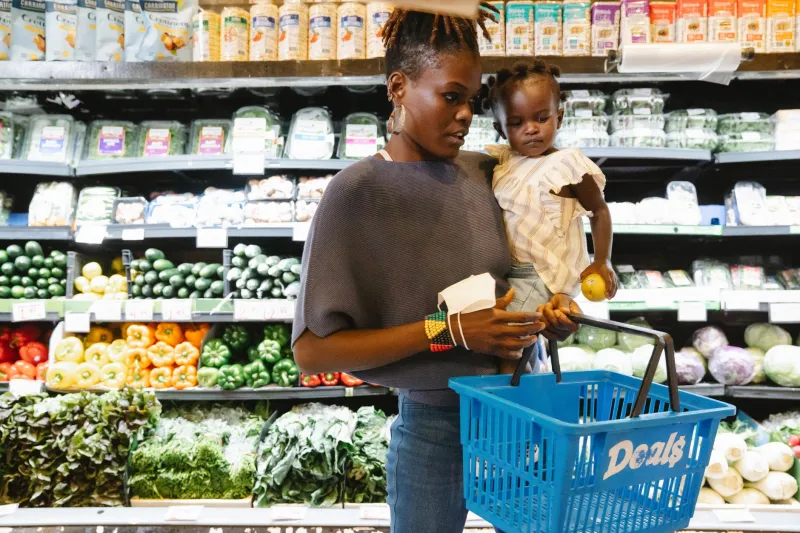
Mine came in the Kroger parking lot on a Tuesday, engine idling, watching my 10-year-old walk through those automatic doors alone with a piece of paper, a twenty, a five, and the confidence of a man who has never once compared unit prices in his life.
The Setup: One List, One Budget, Zero Supervision
The rules were simple. Here's the list: bread, eggs, apples, lunch meat, and a gallon of milk. Here's $25. The budget is the budget. If you come back with $25 in stuff, you did your job. If you come back with change, you get to keep the change, which — let me tell you — is the single greatest motivational incentive program I have ever launched. Costco should study this.
I stayed in the car. Not because I'm lazy (I am, but that's not why), but because hovering defeats the entire purpose. The whole point of an unsupervised errand is that it is, definitionally, unsupervised. A parent standing three feet away whispering "get the store brand" is not independence. It's a puppet show.
The Math Curriculum Nobody Charges Tuition For
Let's talk about what my kid learned in that store, because it was more than I taught him in any given month of nagging:
- Budget arithmetic under pressure. When you have $25 and the list adds up to $27.40, something has to go. Watching a child do that subtraction in real time is watching a tiny accountant have an existential crisis.
- Price comparison. He came home and voluntarily explained to me that the store brand milk was $2.30 cheaper and "basically the same milk, Dad." Basically the same milk. Ten years old and he's already figured out what took me until age 34.
- Navigation and sequencing. Produce first or last? What's the most efficient route to dairy? This is logistics. This is operations management. This is a skill set I did not acquire until my first warehouse job.
- Talking to strangers. He had to ask an employee where the lunch meat was. He had to say "excuse me" and everything. Devastating. Effective.
No worksheet on Earth produces that portfolio of skills in a 22-minute window.
The Strangers: Silent Judges, Nonexistent Reporters
Now let's address the looks. Because there were looks.
I could see the entrance from my parking spot, and I watched a woman in a Sunbelt-looking athleisure set do a full head-swivel when my kid walked in alone. She looked around for a parent. She did not find one. She looked at me through the windshield — how she knew, I'll never know; I assume parents have a certain energy — and she gave me the look. The look that says I see you, and I have opinions.
Here's the thing, though: she reported me to no one. Because there's no one to report you to. Letting your kid buy groceries at 10 is not just legal, it's practically patriotic. Every person over 50 who walked past that car didn't give me the look at all. They gave me the nod. The nod that says, "That's how I grew up. I had a paper route and a rifle and nobody knew where I was until the streetlights came on."
The generational divide on this issue is a canyon, and I live happily on the bottom of it.
The Cost-Benefit Analysis: What Was on the List vs. What Came Home
Let's audit the receipts, shall we? Because no experiment at The Detached Parent is complete without itemized consequences.
On the list: bread, eggs, apples, lunch meat, milk.
What came home: bread, eggs, apples, lunch meat, milk, a single doughnut, a 99-cent toy car that he informed me was "an investment," and $2.71 in change he counted twice in the parking lot before proudly presenting it.
So yes, the impulse buys claimed their tithe. The doughnut was eaten before he reached the car. The toy car has already been lost, which is the natural lifecycle of all toy cars. Total damage: roughly $3.50 in unbudgeted spending.
The benefits, itemized: one child who can now navigate a grocery store, count money, make change, interact with retail employees, resist (mostly) temptation, and experience the crushing weight of trade-off decisions. Plus, I didn't have to go into the store. At all. I sat in air conditioning and listened to the end of a podcast.
I have run cost-benefit analyses on a lot of parenting decisions and most of them come back "we'll never know and it doesn't matter." This one came back a landslide.
Add It to the Milestone List
Somewhere between "ties own shoes" and "does own laundry" should sit "completes a solo errand with cash and a list." It's a bigger deal than either of those. Tying shoes is muscle memory. Walking into a building alone, managing money, and coming back with mostly the right stuff is a whole human operating in society.
Is it the ultimate independence milestone? I'd argue yes, or at least top three. It's got stakes, skills, strangers, and a budget. It's the real world in miniature, with a baked-in reward (kept change) and a natural consequence for failure (no doughnut).
Next month: he does the pharmacy pickup. The month after that: the hardware store, which I expect to end with a receipt I don't understand and a strong opinion about the correct type of screw.
The car will be running. I'll be in it. Some jobs as a getaway driver you just don't quit.