Before They Age Out of Childhood: A Working Checklist of Risky, Glorious Independence Milestones
There's a photograph of me, age nine, on the roof of my friend Danny's garage. Nobody took it to document a parenting failure. Nobody took it at all. That's kind of the point — no adult knew where I was, and the camera only came out because Danny's older sister found the whole situation funny.
Fast-forward to my own kids, and I have a GPS tracker that pings me when they leave a two-block radius. I've read three articles this month about stranger danger, two about lawn mower injuries, and one about the psychological perils of "toxic achievement culture." Meanwhile, my children have never once crossed a street without an adult performing a four-point safety inspection first.
Something has gone sideways. So I made a list.
The Checklist on the Fridge
It's titled "Things You Get to Do Without Me," and my kids think it's a reward system. It's actually a reconstruction of my own 1980s childhood, itemized, with a deadline — because independence has an expiration date, and it's roughly the age when they get a phone and stop coming outside.
The current list, in no particular order:
- Climb the big oak at Memorial Park. Not the low branch. The actual climbing oak, the one where the bark is worn smooth from decades of kid sneakers.
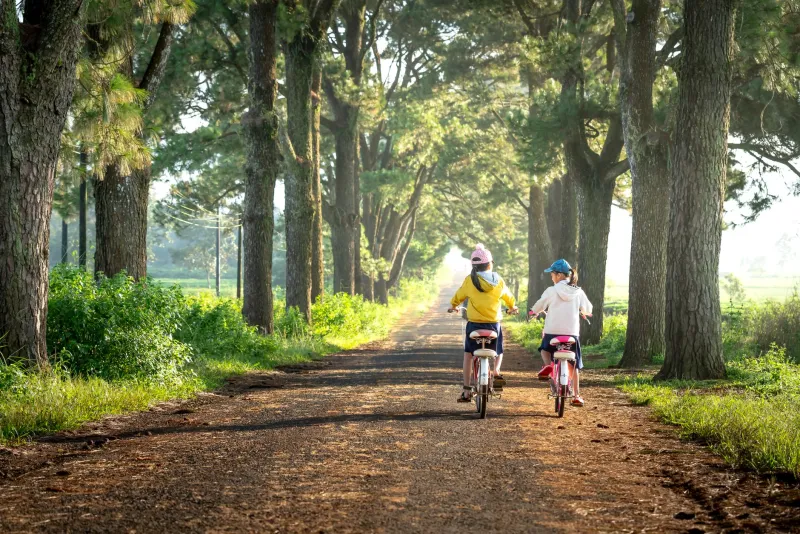
- Bike to the corner gas station with five dollars and come back with a Slurpee and a story.
- Lose an argument with a friend and resolve it without a mediator. Any friend. Any argument.
- Spend an hour at the creek and come home with wet shoes and an unexplained object.
- Walk the dog around the block alone. The dog counts as a witness, not supervision.
- Ring a doorbell to ask if a friend can play, without me dialing the parent first like some kind of diplomatic liaison.
- Make a purchase from a garage sale, including haggling.
- Get mildly lost and un-lost themselves. Key word: mildly.
But Is That Legal?
Here's the part nobody says out loud: the biggest obstacle to this list isn't my kids' ability. It's my fear of you — the hypothetical bystander, the neighbor who calls someone, the deeply held modern American suspicion that a child alone is a crime scene in progress.
So let's talk facts, calmly. In most U.S. states, there is no law specifying an age at which a child can play outside, walk to a store, or wait briefly in a car. A handful of states have guidelines for leaving young children unattended at home, and those are generally about hours, not a ten-minute bike ride. Child welfare experts, including the ones behind the reasonable-parenting movement, have spent years pointing out that unsupervised play is developmentally valuable and statistically far safer than the drive to the park.
I am not a lawyer, and you shouldn't take legal advice from a humor blog, but I've looked up my state's statutes, I know my kids' capabilities, and I've done the single most radical thing a modern parent can do: I actually assessed the real risk instead of the headline risk.
The Rollout Plan
We didn't go from helicopter to free-range in one afternoon. The bike-to-the-gas-station milestone started with me following at a distance so absurd I looked like a private investigator. The second time, I drove to the store and "happened" to be there. The third time, I stayed home and refreshed a tracking app like it was a stock ticker. By the fourth, my daughter came back with a Slurpee, two dollars in change, and intel about a neighbor's new puppy, and I realized she'd been ready for weeks.
The tree came next. I sat on a bench, stared at my phone with great commitment, and let her figure out the third branch on her own. She scraped her palm. She survived. She has now mentioned the tree to approximately everyone she's met, including a waiter.
What I've Noticed So Far
The kids on the checklist are different from the kids on the schedule. They come home with more to say. They fight less — partly because they're tired in the good, physical way, and partly because half the conflicts I used to referee only existed because I was standing right there. Children, it turns out, negotiate differently when the audience leaves.
And the anxiety? It hasn't vanished, but it's changed shape. I've stopped picturing the one-in-a-million catastrophe and started picturing the much more likely outcome: kids who grow up believing someone should always be watching, always facilitating, always one room away. That's not safety. That's a roommate situation with no exit date.
The list is maybe two-thirds done. The creek trip is scheduled for Saturday, weather permitting, and I've been instructed — in writing — not to come.
I'll allow it.