Thirty Days of Parenting Like It's 1974 and Nobody Could Reach Me

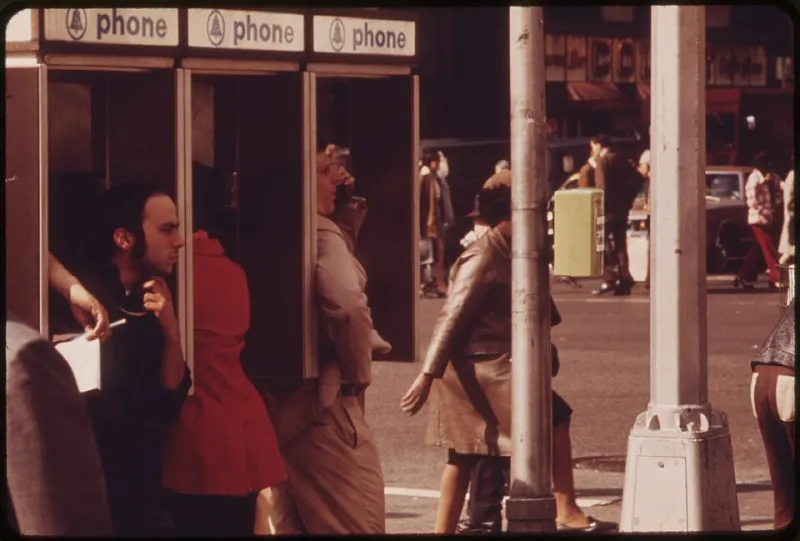
Photo: Barry Lewis, CC BY 2.0, via Wikimedia Commons
There's a photo on my parents' living room wall of me at age seven, standing on the roof of our station wagon. Not sitting on it. Standing on it, arms crossed, like a tiny foreman surveying a job site. My mother keeps it up as proof of a simpler time. I keep looking at it as proof that Child Protective Services operated very differently in 1978.
So when I stumbled across a stack of vintage parenting books at an estate sale — including a 1972 paperback with the genuinely unhinged title Your Child and the Open Road — I decided to run an experiment. For thirty days, I would parent using only advice from mid-century manuals and the recollections of my own 1970s-raised parents. Modern parenting advice would be banned. Helicopter grounded. Benign neglect fully operational.
Here's the field report.
Week One: The Rules Are Beautifully Vague
The vintage books are refreshingly short on anxiety. One, The Sensible Mother's Companion (1969), devotes exactly one paragraph to child safety and four full chapters to teaching your child to make a proper pot roast. The overall philosophy, as far as I can tell, is: feed them, point them outdoors, and don't ask questions until dinner.
My mother, when I called for clarification, offered this summary of her parenting era: "I don't know. You kids left in the morning and came back when the streetlights came on. Was something supposed to happen to you?"
So I implemented the Streetlight Protocol. The kids — ages 8 and 11 — were instructed to leave the house after breakfast and return by dusk. No check-in texts. No AirTags. My 8-year-old looked at me like I'd handed her a passport and a fake mustache.
Day three, my son came home with a pocketful of bottle caps, a new friend named Denny, and a scrape on his elbow he couldn't fully explain. By modern standards, a red flag. By 1974 standards, a Tuesday.
Week Two: The Boredom Recession Ends
Here's something the manuals don't tell you but the data does: kids today are scheduled within an inch of their lives. Free play among school-age children has dropped dramatically since the 1970s, and researchers like Peter Gray have spent careers arguing that this correlates with rising anxiety in kids. The vintage books, in their blunter way, agree. One 1975 guide literally instructs parents to "resist the urge to entertain the child, as boredom is the mother of invention."
By week two, my kids stopped asking me what to do. This was, I want to be clear, miraculous. My daughter built a fort out of landscaping debris. My son invented a game involving a tennis ball, the garage door, and rules so complex he had to write them down. Neither of them asked for a screen for eleven consecutive days. I checked. That's a record in this household.
Week Three: The Keys Around the Neck Era
Mid-month, I introduced the crown jewel of 1970s parenting: the latchkey experience. My 11-year-old got his own house key on a lanyard and instructions that fit on an index card: come home, lock the door, have a snack, nobody answers the door, don't burn the house down.
I then did something radical — I went to the grocery store alone. Not a curbside pickup situation. Physically inside a store. Buying groceries. At a leisurely pace. I lingered in the cereal aisle like a woman with nowhere to be, because I was a woman with nowhere to be.
He was fine. He ate three popsicles and left the wrapper on the counter, which is how I knew he'd been home. The wrapper felt like a love letter.
Week Four: The Results Are In
Did my children thrive under a regime of glorious, well-documented neglect? Reader, they did. My 8-year-old can now make grilled cheese unsupervised. My 11-year-old rode his bike to Denny's actual house, a half-mile away, without a support team. They negotiate their own disputes with the neutrality of Switzerland, because I stopped showing up as a mercenary for whoever yelled my name first.
And I felt... guilt, at first. That's the real difference between then and now, I think. The 1970s didn't have parenting books that made you feel watched. Now every choice is a referendum on your character. The old manuals are appealing precisely because they assume you're doing fine and the kid is fine and honestly everyone should stop fussing.
The Fine Print
I'm not saying we should hand out cigarettes and station wagons. Some of what's changed since the 1970s changed for good reasons — car seats, helmets, a general awareness that strangers exist. I kept the modern guardrails that matter. But I'm keeping the Streetlight Protocol too, at least on weekends.
My mother, upon hearing the experiment went well, was insufferably smug. "So the method I used for eighteen years works," she said. "Interesting. Tell the internet."
Mom, consider it told.