180 Days of Dressing Themselves: A Retrospective on the Year My Second-Grader Dressed Like a Storm Chaser
The Experiment
Last August, in a moment of exhaustion that I mistook for enlightenment, my spouse and I made a joint declaration over the kitchen island: this school year, the kids pick their own clothes. Every day. No vetoes. No commentary. No "you can't wear that to picture day."
The rationale was pure Detached Parent doctrine — independence is built in the small choices, not the big ones, and nobody ever failed third grade over a graphic tee. Also, the morning outfit battles were eating forty minutes a day, and I had begun having elaborate daydreams about mornings where I simply drank my coffee while it was hot.
What follows is my official review of the year. Critics have called fashion week in Paris "unpredictable." Paris has nothing on a second-grader with a full drawer of options and a grudge against pants.
Fall Semester: The Peak Era
September was bold. September was confident. Our six-year-old treated the walk to the bus stop like a runway, and the runway had no rules.
The signature look of early fall was a superhero cape worn over a winter coat, worn over pajamas, paired with rain boots — in dry weather. The logic, when pressed, was airtight: "the cape has to go over everything or it doesn't work." I could not argue with this. I did not try.
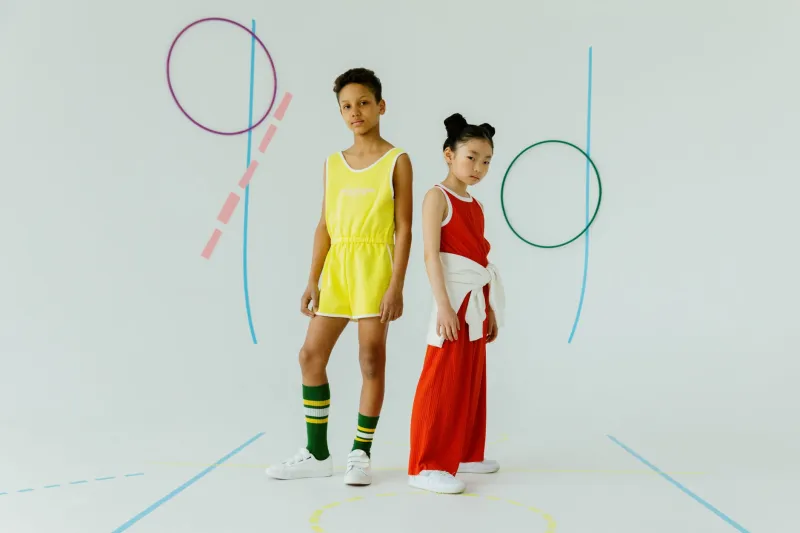
There was also a two-week stretch where my daughter wore a single oversized flannel shirt as a dress with soccer socks pulled up to her knees. When I asked about it, she said, and I quote, "it's a look." She was not wrong. A neighbor asked if we were doing some kind of homeschool fashion unit.
By mid-October, something remarkable happened: the teachers stopped asking questions. The first few weeks, we got the gentle, professionally-worded notes. "Just checking in — everything okay at home? We noticed the cape." By Halloween, the notes stopped. I believe the staff reached a collective understanding, the way communities do after a storm, that this was simply our normal now.
Winter: The Pajama Accords
Winter is where the movement lost some of its early idealism and settled into pragmatism. The pragmatism took the form of pajama bottoms worn to school on a near-daily basis, defended with the now-immortal household argument: "they're basically pants."
Are they basically pants? Legally, no. Philosophically? I've come around. They cover the legs. They have a functional waistband. My own work-from-home wardrobe suggests I am in no position to litigate this.
The winter wildcard was footwear. Snow boots with shorts appeared twice, both times on days above 50 degrees, because the boots were "for the slush," and there was no slush. Conversely, there was a February morning when my son walked to the bus in Crocs. Through snow. When I raised this, he informed me he wore two pairs of socks, "so basically the same as boots." The school called once. Just once. The call was less about the Crocs and more about the fact that he'd also worn swim goggles, indoors, all day, for reasons he has taken to his grave.
Spring: The Aesthetic Period
Spring brought refinement. This is the phase fashion historians would call the Neo-Mismatched movement: stripes with plaids, a bucket hat worn indoors, one episode involving a bow tie with a basketball jersey that I have since described to friends as "fearless."
My daughter developed a color theory all her own, which held that any two colors are a valid combination as long as you commit. She committed. She wore head-to-toe neon orange on picture day. The photos came back. She looked like a traffic cone who believed in herself. We ordered extra prints.
The Findings
A year of data, summarized:
- Complaints from the children about outfits chosen by the children: zero. This is the entire point. The morning battles didn't shrink; they went extinct. Nobody argues with a committee they chair.
- Cost to the family: zero. Every disaster outfit was assembled from clothes we already owned. Turns out kids don't need a capsule wardrobe; they need a drawer and the freedom to misuse it.
- Academic damage: none detected. Both kids passed everything. Neither has mentioned the Crocs incident as formative trauma.
- Social cost: one. A single classmate said the T-Rex costume (a whole other week, don't ask) was "for babies." My son wore it the next day anyway, which is either a resilience lesson I couldn't have taught or a warning sign. I've decided it's the first one.
Renewal Terms
The experiment concluded in June and has been unanimously renewed for next year, with one amendment: weather-appropriate footwear is now a firm rule, written on a sticky note inside the closet, because the Crocs thing genuinely scared me.
Otherwise, the wardrobe remains sovereign territory of the small people. They dress like tiny lunatics, they arrive at school happy, and I drink my coffee warm. Everyone's teachers have adjusted. Everyone's dignity, arguably, has grown.
Fashion week ends when the designers say so. Ours say it's a lifestyle.