Thirty Days of Letting the 9-Year-Old Feed Himself: A Survival Report
Like every great scientific endeavor, this one began with a breakdown. Mine. It was 9:40 p.m., I was assembling a bento box that could've been photographed for a lifestyle blog, and I thought: I have made 4,000 of these. My child does not know where the bread lives.
So we held a brief family summit (me, at the kitchen counter, holding a spatula like a gavel) and announced that for one month, the nine-year-old would pack his own lunch. Fully. Every day. My involvement would be limited to buying food and offering unsolicited commentary, which — let's be honest — I'd be doing anyway.
Here's the field report.
Week One: The Granola Bar Era
The first week, he packed what I can only describe as a monoculture. Four granola bars. Sometimes five. One heroic day, six.
My nutrition anxiety arrived on schedule, right on time, wearing its little concerned face. He's going to be hungry. He's going to crash at 10:15 a.m. His teacher is going to think we live in a van. I said none of this out loud, which was the hardest thing I've done as a parent, including labor.
He came home hungry. He ate an enormous snack. He survived. Noted.
Week Two: The Trade Economy Reveals Itself
This was the week I learned that an American elementary school cafeteria operates a commodities market that would make the Chicago Mercantile Exchange blush.
My son came home and casually explained that he had traded a granola bar (overvalued, apparently — "everyone has those") for half a Uncrustable, and that Takis trade at roughly three-to-one against fruit snacks, and that a kid named Dylan cornered the juice box market after a snow day. I asked follow-up questions for twenty minutes. This child has never once told me what happened at school, but he narrated the cafeteria economy like a Bloomberg anchor.
His lunches this week got slightly more interesting, presumably for trade leverage. Was it nutrition? No. Was it strategy? Deeply.
Week Three: The Protest and the Pivot
Around day 16 came the inevitable labor dispute: he declared lunch-packing "boring" and wanted to know why I didn't have to do it anymore either. Fair point, honestly. I explained that this is the deal with all jobs, including the ones we didn't sign up for, like being nine.
Then something interesting happened. Rather than negotiate, he got efficient. He started packing the night before. He asked for a shelf at his height in the pantry. He requested — requested — a thermos. A child who once asked me where the refrigerator is now runs a small lunch-packing operation with better logistics than my own weeknight dinners.
Week Four: The Day of Balance
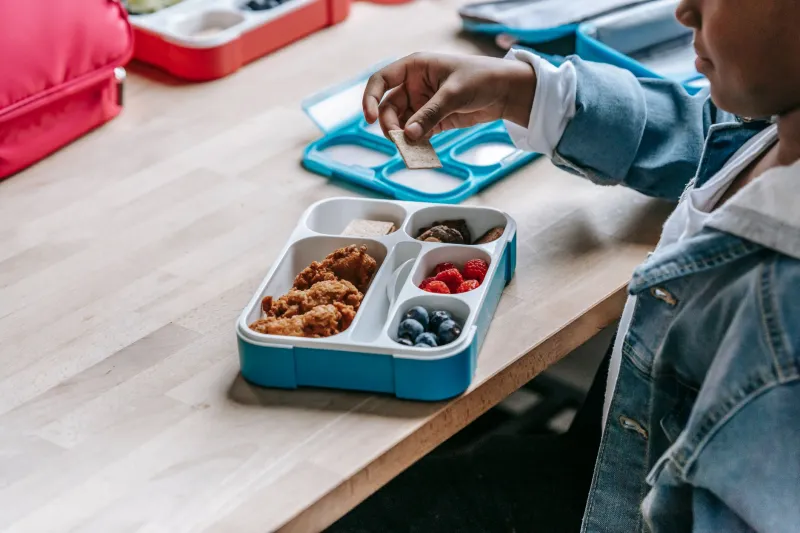
And then, on day 27, without ceremony, he packed the following: a turkey sandwich, apple slices, baby carrots, and one granola bar. A granola bar! Singular! As a dessert, like a person who understands granola bars!
I want to be clear that I did nothing to engineer this. I didn't lecture, didn't meal-plan, didn't put a food pyramid on the fridge. He just eventually noticed that four granola bars make you feel bad at 2 p.m. in a way that a sandwich doesn't. It took roughly 27 days, which is about how long it takes me to learn anything too.
What Actually Survived the Month
- My nutrition anxiety, mostly dead. Turns out kids trend toward adequacy when you get out of the way.
- The trade economy, thriving. I have no notes. Dylan is a visionary.
- My 9:40 p.m. evenings, resurrected. I now spend them sitting down, which is a hobby I'd forgotten I had.
- His autonomy, which turns out was the whole point hiding under the granola bar wrappers.
Would I recommend this? For most kids old enough to open a lunchbox unsupervised: yes, with two guardrails. Keep reasonable food in the house (nobody makes good choices from a pantry of marshmallows), and let hunger do the teaching instead of you.
He still can't find the bread. But now it's his problem, and honestly, it's a beautiful thing to watch.